Introduction
On March 1, 2023, OpenAI released the ChatGPT API. Tony Dinh, a Vietnamese developer who had spent four years building side projects that mostly failed, asked ChatGPT itself to suggest a domain name. That same day he registered typingmind.com. Four days later, he had a working MVP. On March 6, 2023, he released it and tweeted the link.
Day one brought $1,000. Day two, $2,000. Day three, $4,000. Seven days in, TypingMind had made $22,000.
Today the product — a better front end for the world's AI models, with persistent history, search, folders, file uploads, and AI agents — earns about $137,000 a month, per the figure on Dinh's own X bio, and third-party reporting puts the number between $130,000 and $160,000 a month. TypingMind crossed $1 million in annual revenue within its first year. The entire operation, once a solo effort and now a tiny team, is built by a founder who gave himself four years of runway, a laptop, and a deliberately modest goal: $1,000 a month.
The Story
In August 2021, Dinh walked out of his software engineering job in Singapore for the last time. He had been a developer for about seven years, earning roughly $105,000 a year building other people's products. He had also spent the previous two years quietly building his own on the side. He moved back to Vietnam with enough savings to survive four years without revenue — and a goal that now looks almost quaint: $1,000 in monthly recurring revenue in the first year. "Enough to live comfortably," as one profile put it. "Enough to prove the idea was real."
The next two years were not a straight line. His first real product was Black Magic, a Twitter analytics tool. It grew steadily, from about $500 a month in combined revenue across his projects in 2021, to $4,000 MRR by early 2022, to roughly $13,000–$14,000 MRR by early 2023. Then, in early 2023, Twitter announced its API would cost $42,000 a month. Black Magic's entire monthly revenue couldn't cover a third of that. There were two options: shut it down or sell it. Dinh chose to sell — for $128,000, well below an acquisition offer he had once rejected. In his own words, "Honestly, it was frustrating."
He also built two AI products before AI was cool enough to rescue a launch. EmojiAI and AskCommand made a combined total of around $100, despite one launch tweet pulling 5,000 likes. There was Xnapper, a screenshot tool he later sold for $150,000 to focus on TypingMind. There was DevUtils, a developer toolkit that still brings in about $5,000 a month — durable utility software doing quiet, unglamorous work. All of it was scar tissue and schooling: product selection, pricing, launch timing, emotional resilience.
Then the window opened. Dinh had long been frustrated with the ChatGPT web interface — he couldn't search past conversations, it felt slow, logging in every day was a hassle. "It's faster to just build this myself," he thought, and meant it literally. The weekend prototype became a product: faster, with history search, organization folders, multi-model support, and a pay-once lifetime license model alongside plans. He priced it at $9 at launch and raised it to $39 within days as features landed. By mid-2023, TypingMind was doing around $30,000 a month. By January 2024, it hit $50,000 MRR. By late 2025, it was clearing $130,000–$160,000 a month with margins around 85% — and over half of that revenue was recurring B2B income from the Team version, not one-off personal licenses. The business claims more than 20,000 daily users.
Dinh's own account of the second year reveals how the operation changed as it grew. In his newsletter essay "My solopreneur story: zero to $45K/mo in 2 years," he wrote that he had always preferred going solo — no meetings, no discussions, more time to build. But doing the same support tasks over and over got boring, so he hired one full-time employee (content, marketing, support) and three freelancers (development). The result: he got his free time back without customers noticing, the product kept moving, and he still works about four hours a day — only on the things he finds interesting, whether that's a new feature or an experiment like T3 Chat, the new app he announced in 2025.
The portfolio kept diversifying. In 2025 he published My Indie Book, a collection of seventy-something lessons from the journey, and sold 1,700 copies in pre-order at $19. Image.Social, a tiny experiment, brings in about $50 a month. DevUtils, the boring developer toolkit, brings in a hundred times that. His X bio — "typingmind.com $137K/m · devutils.com $5K/m" — is itself a lesson: the headline product earns the glory, the unsexy utilities pay the stability tax.
And he has a theory about why it worked. In a post that reached 120,000 views, he wrote: "The market is so big that I think if you just take any idea and SERIOUSLY build + market it, you'll have a chance to get $5k/month on almost any idea." Four years, a handful of failures, one platform window — and a founder who was already shipping when it opened.
Lessons
Tony Dinh's run offers three mechanics worth stealing: 1. Keep a window list, then ship in days: TypingMind wasn't a flash of genius; it was a prepared founder meeting a platform shift. The ChatGPT API launched, the domain was registered the same day, the MVP shipped four days later, and $22,000 arrived in a week. Copy it: keep a written list of "products I would build if this platform opened access" — for every API, store feature, or ecosystem you use. When the window opens, it stays open for weeks, not months. Scope your MVP to one weekend and launch while the attention is still hot. 2. Pre-write your kill rule and take the money: when Twitter priced its API at $42,000 a month against Black Magic's $14,000 MRR, Dinh didn't grief about sunk cost — he sold for $128,000 and moved on. The sale funded the runway for TypingMind. Copy it: for every product, define the kill threshold in advance (e.g., "if the core input cost exceeds 3× monthly revenue for 60 days, I sell or shut down"). Deciding this at launch is cheap; deciding it after the crisis is expensive. 3. Price up fast, then let the product sell itself: Dinh launched at $9, then raised to $39 within days as features landed — and the B2B Team tier eventually became more than half of revenue. He has said that most of his sales come from word of mouth, and that other marketing channels never worked for him. Copy it: launch cheap enough to get demand signals, raise prices as you add features, and treat product quality as the distribution channel. For a tool people use daily, a great experience is the ad budget.
Closing
Tony Dinh gave himself four years and asked for only $1,000 a month in return. He got his failures — a wiped-out analytics business, two AI products that made $100 between them, six months of building nobody waited for — and he took them as tuition. When the one window that mattered opened, he didn't need motivation or funding or a team; he needed four days. The $137,000 a month is the receipt. The real story is the four years of shipping that made four days possible.
Sources
- Nomadpreneur: Solo founder who turned $100 into $1,500,000 — no team, no investors
- IndieAI Directory: Tony Dinh TypingMind Revenue — Solo Founder Playbook
- Tony Dinh's newsletter: My solopreneur story — zero to $45K/mo in 2 years
- Supabird: Tony Dinh — From a $105K Developer to a $1 Million Indie Hacking Marvel
- StarterStory: How Tony Dinh Built TypingMind to $500K Revenue in One Year
- One Million Goal: Tony Dinh — the Vietnamese developer who chose to ship
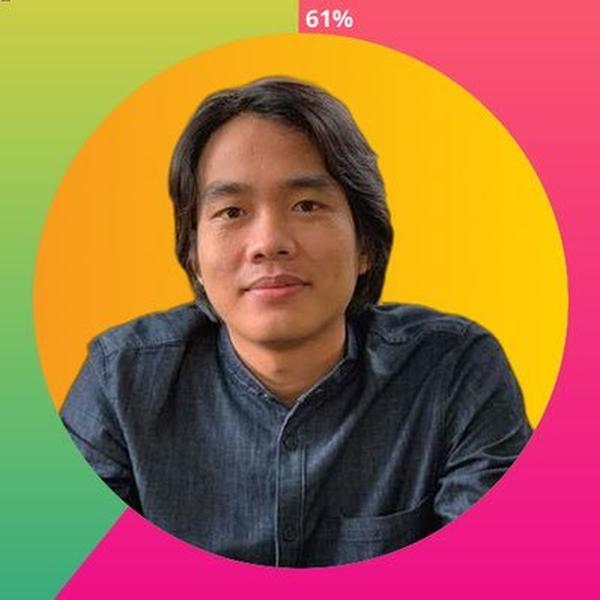
Portrait: Tony Dinh on X (@tdinh_me).