Introduction
Lenny Rachitsky did not set out to build a media company. He set out to write down what he had learned in seven years as a product manager at Airbnb, in public, once a week, for free. The newsletter he started in August 2019 — Lenny's Newsletter, on Substack — became the largest business publication on the platform, passing 1 million subscribers in March 2025. He added a paid tier in April 2020, and third-party analyses of the disclosed subscriber counts put paid-subscription revenue above $2 million a year. In January 2024 he told CNBC that the newsletter and the podcast each earned more than $500,000 a year.
That arc is worth studying because it breaks the usual creator-economy script. There was no viral moment, no audience bought from another platform, and no venture funding. The entire business rests on one unglamorous mechanism: give away genuinely useful professional knowledge for long enough that a small percentage of readers will happily pay for more of it. The conversion rate that makes it work — roughly 4 to 5 percent of free readers becoming paid — was already visible in the first six weeks. Everything since has been scale, not reinvention.
The Story
The newsletter began as notes from a practitioner, not content strategy. Rachitsky spent seven years at Airbnb as a product manager, working on the kind of growth and marketplace problems that product teams everywhere struggle with: onboarding, retention, pricing, hiring product managers, deciding what to build next. When he left in 2019, he started writing about those problems on Substack, free, for about ten months. There was no paid tier, no funnel, and no product. There was simply a weekly essay from someone who had actually done the job, written for people doing it now.
The paid launch is the most instructive moment in the story, because it was deliberately late and deliberately small. On April 7, 2020, with about 13,000 free subscribers, Rachitsky turned on paid subscriptions at $15 a month or $150 a year. In the first couple of days he got roughly 200 paid sign-ups, rising to about 450 within six weeks — a conversion rate of around 3.5 percent. Substack's own case study of the launch put the early paid revenue at about $65,000 a year. It was not a windfall. It was proof that a few hundred people would pay for deeper versions of something thousands already read for free.
From there the numbers compounded the way subscription businesses do: slowly, then all at once. By the end of 2020 the list had grown to roughly 45,000 free subscribers and 3,300 paid, for first-year revenue above $300,000. A podcast followed in June 2022 — long-form interviews with product leaders, free to listen — which became a second engine: guests brought their own audiences, listeners discovered the newsletter, and a fraction of them converted to paid. By the time analysts measured the business in 2023 and 2024, the counts were about 377,000 free subscribers and more than 18,000 paid, a conversion rate of roughly 4 to 5 percent. Multiply 18,000 paying readers by $150 a year and you get $2.7 million gross; subtract Substack's and payment fees and the public estimates land in the mid-$2 millions. That figure is an estimate built on disclosed subscriber counts, not a number Rachitsky himself has published — and it is worth saying so, because the gap between a disclosed count and a claimed total is exactly where creator-economy hype usually hides.
The milestone that changed the story's category came in March 2025, when the newsletter passed 1 million subscribers. At that scale it stopped being a niche product-management publication and became the largest business newsletter on Substack. The same year brought a second podcast, How I AI, and a Product Pass bundle packaging the newsletter with partner tools. None of these changed the model. They widened the top of the funnel — more free readers — while the paid tier kept doing the same job it had done since April 2020: converting about one reader in twenty.
There is a quiet discipline underneath all of this that most retellings skip. Rachitsky wrote for ten months before charging anything, and the paid tier arrived only after the free list was large enough that a low single-digit conversion rate still meant real money. He did not monetise attention he had not yet earned, and he did not price for the audience he wished he had. He priced for the audience he had — $150 a year, a number a working product manager expenses without thinking — and let the audience grow into the revenue. Solo founders who launch paid products to lists of a few hundred people usually get this order backwards: they charge before they have earned the right to be paid.
Lessons
Lenny Rachitsky's run offers three mechanics worth stealing:
-
Earn the right to charge: ten months free, then a paid tier only when the free list is big enough: Rachitsky published free for about ten months and waited until he had roughly 13,000 free subscribers before turning on paid subscriptions. The mechanism is a threshold rule: a paid tier converts a percentage, so the absolute number of payers depends entirely on the size of the free list. At 3.5 percent, 13,000 free readers meant about 450 payers and roughly $65,000 a year — enough to matter. At the same rate, a list of 1,000 free readers would have meant 35 payers and a launch that felt like a failure, even though the product was identical. The executable version is a written threshold set before you start. Pick a niche you have actually worked in, publish one genuinely useful free essay every week for forty weeks, and do not build a paid tier until the free list passes 5,000. When it does, launch paid with a single promise — more depth on the same topic, not a different topic — and announce it two weeks ahead with a short discount window, the way Rachitsky did. If the threshold takes longer than forty weeks, the niche or the writing needs work, not the pricing.
-
Do the conversion maths before you dream about audience size: payers times price is the whole model: The newsletter's economics reduce to one multiplication. Roughly 4 to 5 percent of free readers pay, and each pays $150 a year. At 377,000 free readers that is more than 18,000 payers and an estimated $2 million-plus a year after fees. The mechanism is that audience size is only an input; the business is conversion rate times price. Most creators obsess over subscriber counts and then price by gut feel, which is why a list of 50,000 free readers at $5 a month earns less than a list of 5,000 at $150 a year. The executable version is a one-line model built before you write anything. Decide the annual income you want from the newsletter, divide it by your price, and that is the number of payers you need; divide the payers by a conservative 4 percent conversion rate, and that is the free list you must build. A $100,000-a-year goal at $150 a year needs about 670 payers, which needs a free list of roughly 17,000. Work backwards from that number when you choose a niche: if the niche cannot plausibly hold 17,000 free readers, either raise the price, add a second revenue line like sponsorship, or pick a bigger pond.
-
Let one free engine feed one paid engine: the podcast grows the list, the newsletter banks it: The podcast, launched in June 2022, is free, and that is the point. Every episode is a free sample of the same expertise, and every guest brings an audience that has never heard of the newsletter. Listeners who like what they hear subscribe free; about one in twenty eventually pays. The mechanism is a funnel with exactly two stages and no leakage: a free, shareable format that reaches strangers, and a paid format that converts the readers it delivers. Solo founders usually build this backwards — a paid product with no free engine, or three free channels feeding nothing. The executable version is a two-format plan. Keep your written newsletter as the paid core, and add one free audio or video format that interviews practitioners in your niche, one episode every two weeks. Invite guests slightly bigger than you, ask them the questions your readers actually struggle with, and end every episode by pointing listeners to one specific free essay, not to a homepage. Measure only two numbers: how many listeners become free subscribers, and how many free subscribers become paid. If the first number is healthy and the second is not, the paid tier's promise is weak; if the first is weak, the show's topic is wrong.
Closing
Lenny Rachitsky's story is not really about newsletters. Plenty of people write newsletters. It is about the patience to give away the best thing you know, weekly, for ten months, to an audience that starts at zero — and the arithmetic to know exactly when that generosity becomes a business. The newsletter did not succeed because product managers love reading. It succeeded because one product manager wrote down, in public, what the job actually looks like from the inside, and then charged a price that the same readers could expense without a meeting. Most solo founders ask how to get paying customers. Rachitsky's career suggests a better first question: what did you learn doing your last job that your peers would pay $150 a year to keep learning? Write it free until thirteen thousand people agree, and the business is just the multiplication.
Sources
- Lenny's Newsletter ARR: The Disclosed Numbers, Year by Year (GetLatka)
- Lenny's Newsletter: 377K Free, 18K Paid, $2M+ a Year (Small Start)
- Lenny Rachitsky & Lenny's Newsletter: PM Media Empire (Everything-PR)
- Lenny Rachitsky — Creator of Lenny's Newsletter (Indie Maker List)
- One-Person Media & Newsletter Businesses (ToolBistro)
- Creators who quit their day jobs: 8 income mixes (EarnThread)
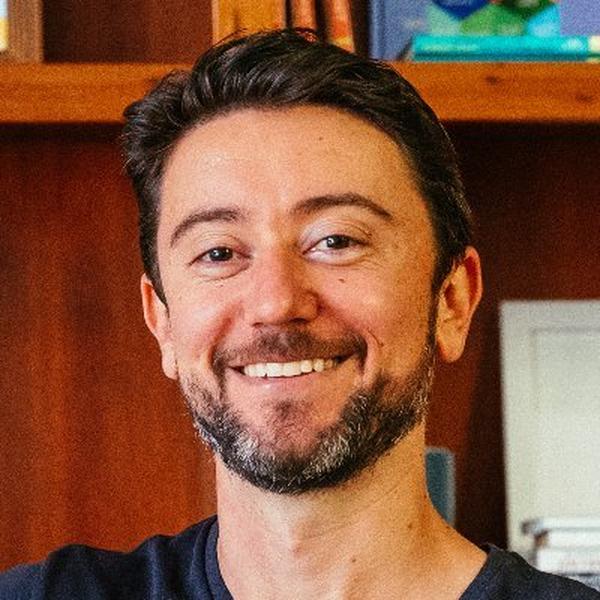
Portrait: Lenny Rachitsky on X (@lennysan).