Introduction
In 2006, Joanna Penn was a business IT consultant in Brisbane, Australia, implementing accounts payable systems for a large mining company. She had spent 13 years in corporate IT across Europe and Asia Pacific. She was, by her own account, miserable — and she did not think she was creative.
Eighteen years later, she has written more than 40 books, sold over a million copies in 176 countries and five languages, and hit the New York Times and USA Today bestseller lists as thriller author J.F. Penn. Her podcast, The Creative Penn, has been downloaded more than 10 million times across 228 countries. She has run a multi-six-figure author business for almost a decade — with no publisher, no boss, and no office. Her own imprint, Curl Up Press, publishes everything she writes.
This is a story about a woman who wrote a book to save herself from a job she hated, and discovered that the book was only the beginning.
The Story
Penn's rock bottom was not dramatic. It was an ordinary corporate life that had quietly become unbearable. In 2005, living in Ipswich near Brisbane and working with a very large mining company, she found herself reading shelves of self-help books and audio programmes, looking for a way out. "I just didn't know what to do with my life," she said later. "I'm just miserable in my job."
Her response was unusual: instead of only reading about career change, she decided to write a book about it — reasoning that if she researched the subject properly, she might find her own answer in the process. She wrote the book in 2006 and 2007, then looked at the traditional publishing industry and decided she did not want to wait years for it to appear. Self-publishing barely existed as a respectable route in 2008 — there was no Kindle, ebooks were still niche, and print-on-demand was only just becoming viable. She did it anyway. In April 2008 she published How to Enjoy Your Job or Find a New One, a title she later cheerfully called terrible. She was ripped off by an author services company and ended up pulping nearly 2,000 of her own books. Then the Global Financial Crisis arrived, and she was laid off from her job.
Worst of all, the books did not sell. Several thousand print copies sat in her front room and glared at her every night when she got home from work. "I discovered that books didn't sell themselves," she said, "and I knew nothing about marketing."
That discovery became the business. Instead of abandoning the book, Penn set out to learn the part she did not know: how to sell books on the internet. On 8 December 2008 she started a blog, TheCreativePenn.com, to share the lessons as she learned them, and a podcast to talk to other creatives. She was not teaching from expertise. She was documenting her own education in public, one mistake at a time.
The writing itself followed the same patient rhythm. She wrote her first novel during NaNoWriMo in 2009 and published Pentecost in February 2011 — later rebranded and republished as Stone of Fire under the pen name J.F. Penn in 2015. By then she had deliberately designed what she calls a portfolio career: several small income streams instead of one job, so that no single employer or publisher could take her livelihood away. In September 2011, three years after her first book, she left consulting and became a full-time author entrepreneur.
The breakout came in stages, not in a single lucky week. In March 2014 she became a New York Times and USA Today bestselling author as part of Deadly Dozen, a box set with eleven other thriller and mystery authors. In August 2016 she hit the USA Today list as a single author, with her ARKANE trilogy box set — Stone of Fire, Crypt of Bone and Ark of Blood. In 2017 she was a finalist for Best Ebook Original at the International Thriller Awards for Destroyer of Worlds. By 2015 she was making six figures from the writing business, and she has run a multi-six-figure business for almost a decade since.
The numbers behind that business are worth stating plainly, because they are the opposite of a viral overnight success. In total she has written 15 novels and co-written five more, plus one memoir, five novellas and nine short stories — more than 40 books across fiction and non-fiction, in two names: Joanna Penn for books about writing, J.F. Penn for thrillers, dark fantasy and crime. Fiction alone has sold over half a million copies across 179 countries; all her books together have sold over a million, in 176 countries and five languages. The podcast has passed 10 million downloads. Her income comes from several streams at once: book sales and intellectual property licensing in every format, affiliate income from the tools she genuinely uses — she makes money from tutorials on software like Vellum — plus international speaking and, for many years, online courses.
And then, in December 2023, she did something most successful creators never do: she announced she was changing the model that had worked for fifteen years. In a post titled "The 15-Year Author Business Pivot," she laid out the next fifteen years. The Joanna Penn brand — the non-fiction books for authors — would step back. J.F. Penn, the fiction, would come first. She would close her evergreen courses in 2024. She would move from high-volume, low-cost products to premium products with a higher average order value, and from selling mainly through retailers to selling direct first, through her own Shopify stores, CreativePennBooks.com and JFPennBooks.com. The reasoning was simple: fifteen years of teaching other authors had run its course, and the fiction backlist was the asset with the longest future.
She has kept moving since. In 2026 she began serialising a new novel, Let Me Be Your Ghost, on Substack — a paid newsletter priced at around $8 a month, which, as she points out, out-earns a single book sale of about $7 the moment a reader stays subscribed past the first month. She also keeps studying: she holds a Master's degree in Theology from the University of Oxford, and completed a second Master's, in Death, Religion and Culture, at the University of Winchester in 2026.
Lessons
Joanna Penn's career offers three mechanics worth stealing:
-
Teach one step ahead of yourself: Penn's blog did not start because she was an expert. It started because she had made expensive mistakes — a bad title, a shady service company, 2,000 pulped books, thousands of unsold copies in her living room — and she wrote about them while the bruises were fresh. The mechanism is that teaching what you have just learned builds a different kind of trust than teaching from a pedestal: readers can see themselves in the person one step ahead, and they stay to watch the next step. The audience that watched her learn became the audience that bought her books, joined her courses and recommended her to other writers. The executable version is a weekly learning log, published while you are still learning. Pick the skill you are acquiring right now — the tool, the market, the craft — and publish one honest lesson a week: what you tried, what failed, what it cost, what you would do differently. Do not wait until you feel qualified. The qualification is the log itself, and after a year of it, you will have an audience, a body of work, and a product in the form of everything you documented.
-
Build a backlist that compounds: Penn's business does not depend on any single launch, because she spent eighteen years building a catalogue. More than 40 books across two pen names means every new reader who discovers one book is handed forty others, and every new book lifts the sales of all the books before it. The mechanism is that a catalogue is an asset that earns while you sleep, while a launch is an event that pays once and then stops. Her fiction sells her non-fiction and her non-fiction sells her fiction; the podcast sells both; affiliate income arrives from tutorials she recorded years ago. The executable version is to plan a catalogue, not a launch. Before you make the next thing, decide what it points to: which older product should a new customer discover second, and which should they discover third? Make sure every product links to the next one, keep everything in print and in every format — ebook, paperback, audiobook — and measure success by the size of the catalogue and its monthly baseline, not by the spike of launch week.
-
Reinvent the model on a schedule, before the market does it for you: Penn closed courses that were still selling, stepped back from a brand that had made her famous, and moved to direct sales and premium pricing — not because the old model had failed, but because she could see it ageing. The mechanism is that every business model has a shelf life, and the person who built it is usually the last to admit it, because the old model still pays. Scheduled reinvention is cheaper than forced reinvention: you choose the timing, keep the audience, and carry the assets forward, instead of losing all three at once when the market moves. The executable version is a model review every two or three years, on the calendar rather than in a crisis. Write down every income stream, mark which ones are still growing, and ask the uncomfortable question: if you were starting today, which of these would you build, and which would you skip? Then kill or shrink one stream that you would not start today, and put the freed time into the stream you would build first. Penn's version of this is the 15-year pivot — and the Substack serialisation that followed it.
Closing
Joanna Penn spent thirteen years believing she was not a creative person. She implemented accounts payable systems for mining companies while, in her own words, she was miserable and had no idea what to do with her life. The book she wrote to answer that question sold almost nothing. The blog she started to explain her failures became a business. The novels she wrote on the side became a New York Times bestseller list. And the business she built to escape one job has now outlasted the career she left by nearly a decade.
"Writing that first book changed my life — not because it sold many copies, but because it opened up a new world of creative possibility." The first book was never the product. The product was the person the book forced her to become: someone who learns in public, builds a catalogue instead of chasing a launch, and reinvents the model before it goes stale. Eighteen years after a miserable consultant in Brisbane decided to write her way out, the rescue is complete — and she is still writing.
Sources
- About Joanna Penn and The Creative Penn (The Creative Penn)
- My Author Timeline. From First Book To Author Entrepreneur (The Creative Penn)
- The 15-Year Author Business Pivot With Joanna Penn (The Creative Penn)
- Joanna Penn Press Kit: Bios, Photos and Interview Topics (The Creative Penn)
- Q&A with Joanna Penn of The Creative Penn (Whitefox)
- How serializing my novel on Substack out-earned the book (Sutoscience)
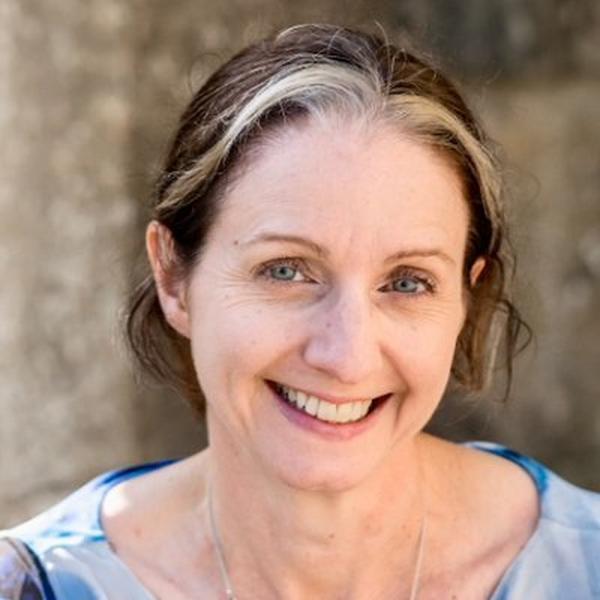
Portrait: Joanna Penn on X (@thecreativepenn).