Introduction
On 16 November 2026, a London-listed communications company announced it had agreed to buy a podcast. The price was $3 million in cash upfront, plus up to $6 million more if the show hit its targets over the next three years — as much as $9 million in total, for a business that made about $1.1 million in revenue the previous year. The podcast was Entrepreneurs on Fire, and its host, John Lee Dumas, had recorded an episode of it nearly every single day for fourteen years.
That is the whole story in one sentence: a man with no audience, no media experience, and no product built the first daily interview podcast in business, published his income every month for a decade, and sold the habit itself. By the time of the sale, the show had passed 4,500 episodes, featured more than 5,000 guests, and been listened to over 175 million times. His own published income reports put cumulative gross income at about $27.9 million and cumulative net income at about $22 million. The buyer did not pay for a viral moment. It paid for a machine that had never stopped.
The Story
Dumas grew up in Alfred, a small town in southern Maine, and spent the first eighteen years of his life there. At eighteen he left for Providence College in Rhode Island on an Army ROTC scholarship, and graduated in 2002 as a commissioned officer. He was among the first group of newly commissioned officers sent to Iraq, where he served a thirteen-month tour as an armor platoon leader — four tanks, sixteen men, at twenty-three years old. He spent four years on active duty, with further time in the reserves.
What followed was a decade of trying on careers and taking each one off again. He enrolled in law school at Roger Williams University and dropped out after a single semester. He worked in corporate finance at John Hancock in Boston. He joined a technology startup in New York. He moved to San Diego in 2009 and tried residential real estate. None of it stuck. In mid-2011 he moved back to Maine and took a job in commercial real estate, spending long hours driving between properties. A friend suggested he pass the driving time listening to podcasts. He started with NPR, then found Pat Flynn's Smart Passive Income and Cliff Ravenscraft's Podcast Answer Man, and became hooked on the interview format — one entrepreneur, one story, one set of lessons, every episode.
In June 2012, at thirty-two, he had the thought that became the business. Every podcast he loved published weekly, or whenever the host felt like it. None published every day. There was no daily show interviewing successful entrepreneurs — a gap he could see clearly because he was exactly the listener it was missing. Within three months he had hired a mentor, joined a mastermind, and quit his job in commercial real estate. On 22 September 2012, Entrepreneurs on Fire went live as the first daily podcast interviewing entrepreneurs, with Dumas asking short, direct questions and letting the guest carry the episode.
The daily cadence was the whole strategy, and it worked faster than anyone expected. The show was named Best of iTunes in 2013. By December 2013, barely fifteen months after launch, Dumas had recorded 400 episodes and had his first $100,000 net month; the business grossed $446,000 in 2013. He recorded in batches — seven or eight episodes in a single day each week — and published one every morning, so the audience formed a daily habit and the archive compounded. By the time of the sale, the show had been downloaded in 145 countries and ranked in the top 0.05% of podcasts globally.
He monetised the audience by listening to it. Listeners kept asking how they could start their own podcast, so in October 2013 he launched Podcasters' Paradise, a subscription course and community for aspiring podcasters. By mid-2014 it had sold 1,011 memberships for $774,280 in revenue. He added sponsorships, affiliate partnerships, physical journals — the Freedom Journal and the Mastery Journal, both Amazon's Choice products — and, in March 2021, his first traditionally published book, The Common Path to Uncommon Success, a seventeen-step roadmap distilled from thousands of interviews. Each product answered a question the audience had already asked, which meant he almost never had to persuade anyone to buy.
The most unusual product, though, was not for sale at all. From June 2012 onward, Dumas published a monthly income report showing every dollar the business earned and spent, with the lessons behind the numbers. He kept it up for years — at one point reporting 89 consecutive months above $100,000 in net revenue — and the reports did double duty: they were content that listeners shared, and they were proof that the advice worked. A podcaster who shows you his profit and loss statement does not need to tell you to trust him. The transparency was also a moat. Competitors could copy the format, the guests, even the questions, but they could not copy fourteen years of published numbers.
The business was never big. It was small on purpose. Dumas and his partner Kate Erickson — who moved with him from San Diego to Puerto Rico in 2016, trading California taxes for a Caribbean base — ran it with a handful of virtual assistants and one recording day a week. The leanness showed in the margins: in 2024 the business reported $1.69 million in gross income and $1.54 million in net income, a margin of about 91%. By 2025 revenue had slipped to about $1.1 million with roughly $0.8 million in net profit — still an extraordinary margin, but a business past its peak, selling at the moment its growth had flattened.
That timing is the point of the sale. Pathos Communications, a UK-listed PR and media firm, had already been placing more than a hundred of its clients as guests on the show since early 2025, so it knew the asset from the inside: a daily show with a loyal business audience, monetised through guest-appearance fees and sponsorships, with a host willing to stay. The deal, announced on 16 November 2026 and completed days later, paid $3 million in cash upfront with up to $6 million in earnouts over three years, and Dumas signed a three-year service agreement to keep hosting. The show stays editorially independent; the owner changes, the voice does not. He sold a fourteen-year habit at the price of a small software company — and kept the job he actually likes.
Lessons
John Lee Dumas's career offers three mechanics worth stealing:
-
Win by frequency, not by polish: Entrepreneurs on Fire was not the best-produced business podcast of 2012. It was the only one that showed up every day. The mechanism is that frequency compounds in ways quality cannot: each episode is a new chance to be discovered, a new reason for a listener to return tomorrow, and a new page in an archive that grows more valuable the longer it runs. A weekly show needs 86 years to reach 4,500 episodes; Dumas did it in fourteen. The executable version is a cadence test: pick a publishing rhythm you can sustain for five years without burning out — daily, if you can batch it — and protect it above everything else. His batch system is the key detail: seven or eight episodes recorded in one day a week, then released one a morning. Frequency is a production problem, not a willpower problem, and it is solved by batching.
-
Publish the numbers and let the numbers sell: the monthly income reports were the most valuable marketing the business ever did, and they cost nothing to produce. The mechanism is that a public profit and loss statement does three jobs at once: it proves the advice works, it gives the audience a reason to come back every month, and it turns every sceptic's objection into a question the numbers already answer. Listeners who watched the reports for a year did not need a sales page for Podcasters' Paradise — they had watched the business being built in real time. The executable version is a monthly one-page report: revenue, expenses, profit, and one lesson from each, published on a fixed date whether the month was good or bad. The bad months are the point. A report that only appears when the numbers are flattering is an advertisement, not evidence.
-
Sell the audience's next problem, not the same product forever: every product in the EOFire catalogue started as a question listeners were already asking. They asked how to start a podcast, so he built Podcasters' Paradise. They asked how to set goals, so he made the Freedom Journal and the Mastery Journal. They asked for the patterns behind thousands of interviews, so he wrote a seventeen-step book. The mechanism is that a product built from an asked question arrives with its demand already assembled — there is no cold launch, because the buyers were the ones who requested it. The executable version is a thirty-day question log: write down the three questions your audience asks most, in their exact words, and build the product that answers number one. If nobody is asking you anything, you do not have a product problem. You have an audience problem, and no product will fix it.
Closing
John Lee Dumas did not sell a podcast. He sold fourteen years of showing up — 4,500 mornings, one episode at a time, with the numbers published in public the whole way. The buyer paid $3 million upfront and up to $6 million more not for a viral hit or a clever format, but for a habit that a loyal audience had built into its day, and for a host who had agreed to keep showing up for three more years. The exit was not the reward for the work. The exit was the work, priced.
The lesson is not that podcasting pays. Most podcasts do not. The lesson is that a boring promise, kept daily for fourteen years, becomes an asset no one can copy — because the only way to copy it is to start fourteen years ago. Dumas started on 22 September 2012, when nobody was watching, and the numbers he published every month since were the receipt. The daily episode was the product. The income report was the proof. The sale was the arithmetic.
Sources
- Pathos Communications: Acquisition of Entrepreneurs on Fire Podcast (LSE RNS, 16 Nov 2026)
- Podnews: "JLD" sells Entrepreneurs On Fire for up to $9 million
- Starter Story: The Story of John Lee Dumas
- Providence College: Podcast pioneer John Lee Dumas '02
- Forbes: How to Podcast for Profit — $2M Sales in Year 2 with Entrepreneur on Fire
- Military.com: Veteran Entrepreneur Profile — John Lee Dumas
- John Lee Dumas, cumulative income figures via Brands Owned By
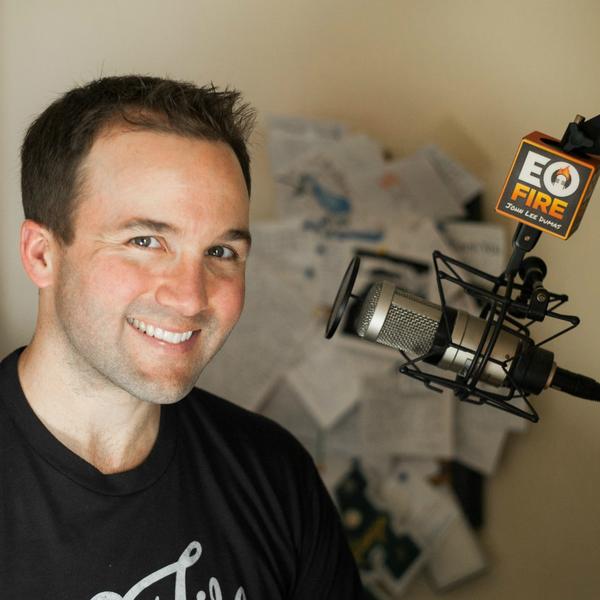
Portrait: John Lee Dumas, CC BY-SA 3.0, via Wikimedia Commons.