Introduction
Most people who sell a company sell code, customers, or brand. Daniel Vassallo sold something stranger: a community built around a philosophy — and Gumroad paid him $3.5 million for it. The deal, announced in 2023, was roughly $1.8 million in cash plus $1.8 million in Gumroad stock options, for a Discord server, a mailing list, and a way of thinking about work.
The philosophy is right there in the name: Small Bets. Don't raise venture money. Don't pick one idea and bet your life on it. Run a portfolio of low-cost experiments, let the market tell you which one breathes, and keep your downside small enough that being wrong costs you weeks, not years. Vassallo is a former Amazon engineer who left big tech around 2019 and, by his own public accounting, earned $1 million in his first three years of self-employment. His story is the most documented case study in indie circles of what happens when you treat your career the way a good investor treats capital: diversified, ruthless about losers, and patient with winners.
The Story
Vassallo grew up in Europe and spent years as a software engineer, including a long stretch at Amazon and AWS. The learning curve was steep at first, then it flattened — and that flatness is what pushed him out. He didn't leave with a master plan. He left to work for himself, on his own terms, and figured out the business model as he went.
His first bets were information products mined from his own expertise. "The Good Parts of AWS," an ebook that distilled the cloud platform down to the features worth knowing, and "Fundamentals of AWS," a companion video course. He has said he made $404,473 selling the ebook and the course — proof that deep, boring, technical knowledge converts into money when it's packaged for the exact people who need it.
The bigger bet came next, and it started almost by accident. Vassallo launched "A Portfolio of Small Bets," a cohort course teaching exactly what he was doing: launching micro-projects instead of chasing one unicorn. The course sold out week after week — $150,000 in revenue in five months from about 400 customers. But the surprise wasn't the course. It was the side channel he had set up to support it: a Discord server for the students.
Left to their own devices, the students didn't just log in for homework. They introduced themselves, shared what they found, answered each other's questions, encouraged each other — all without prompting. The community was becoming more valuable than the course it was attached to. So Vassallo did something most founders would consider backwards: he flipped the positioning and started selling the community first, with the course as the bonus.
The pricing broke every rule of the subscription era. Instead of monthly or annual billing, members paid a one-time fee for lifetime access — $375 at launch. No renewal, no churn to fight, no re-engagement emails begging people to stay. The numbers that followed suggest the model worked: Small Bets did $80,040 in 2021, $445,690 in 2022, $455,447 in 2023, and $438,250 in 2024. Between its founding in November 2021 and October 2023, the community generated $824,409 in revenue against $222,514 in costs — a margin around 75%. Vassallo has argued the one-time fee was itself a quality filter: it kept out the tourists, and because nobody ever "cancelled," members could drift away and re-engage years later, with every return carrying fresh value and referrals.
He ran the community like an operator, not a guru. The core of the offering was a weekly roster of live events — one or two per week, covering everything from SEO to taxes — often taught by members who had mastered a topic, paid a standard $1,000 per session. Total spend on events: $83,500. He also negotiated a portfolio of course deals for members, offering creators a $5,000 flat fee so members could access their courses free or discounted — $31,000 spent, and the one thing he'd call a failed experiment, since members rarely redeemed courses without a deadline forcing their hand.
The portfolio kept growing in the background. Alongside Small Bets he ran "The Lab," his course arm: $161,088 in 2022, $328,279 in 2023, $411,676 in 2024, and a projected $531,464 in 2025. He was, at various points, selling info products, running a community, doing contracting work, and experimenting with software — the portfolio of small bets, lived in real time.
Then came the exit. Gumroad — the platform he had been selling through all along — acquired Small Bets for a reported $3.5 million. The deal made sense on both sides: Gumroad bought Daniel's community expertise and several thousand potential new customers, and Daniel converted a community that would have taken four-plus years to earn that cash into a single payday. He has kept operating in the same style since: a portfolio, not a job.
Lessons
Daniel Vassallo's run offers three mechanics worth stealing:
-
Price once, not forever: the one-time lifetime fee is a filter, not just a pricing choice. Subscriptions select for impulse joiners who churn in months; a single meaningful payment selects for people who intend to stay, and the members who drift away still come back — no win-back campaign required. Copy it: if you run a community, course, or membership, test a lifetime tier priced at three to four times your annual fee, and measure not just signups but re-engagement and referral rates over the next year. Vassallo's own average lifetime value per member came out around $200 — higher than a monthly plan at a lower price would have produced.
-
Monetize the byproduct: the Discord was supposed to be homework support; it became the business. Nobody planned Small Bets the community — it emerged from watching where members actually spent their time, and Vassallo had the discipline to rebuild the product around it. The mechanism: attach a room to everything you sell — a chat, a cohort, a comments section — and instrument attention, not just revenue. When the room consistently out-engages the product, stop selling the product. Most founders defend the original thesis; the money is usually in the accident.
-
Bet small on purpose, and refuse to over-validate: Vassallo's most controversial advice is that founders should stop validating so much. Validation culture — extensive pre-research before writing a line of code — optimizes for not being wrong, which is a different goal than making money. His alternative: run three to five bets in parallel, cap each one's cost in weeks, and let revenue signals kill the losers instead of letting spreadsheets kill the winners. The Small Bets community itself is the proof — it was the unvalidated side project of a validated course, and it outgrew the course by an order of magnitude.
Closing
Daniel Vassallo's career is a single argument, repeated at every stage: the biggest risk in self-employment isn't betting too small — it's betting everything on being right the first time. He was wrong about plenty of things. The deals portfolio flopped. Most bets stay small. But the portfolio arithmetic doesn't need him to be right often; it needs one bet to be right enough. A $375 Discord server became a $3.5 million acquisition because its founder refused to pick one lane — and then refused, again, to sell the thing his customers had already decided was the product.
Sources
- Community Inc: How Daniel Vassallo Grew a Group of Small-Time Entrepreneurs to $1M
- Creator Science: Gumroad Buys Small Bets — Was It a Good Deal?
- Bill Prin: Key Takeaways From the Portfolio of Small Bets Class
- Daniel Vassallo on Product Hunt
- WeAreLATech: Indie Success — Daniel Vassallo's Small Bets Community Journey to $3.5M Acquisition
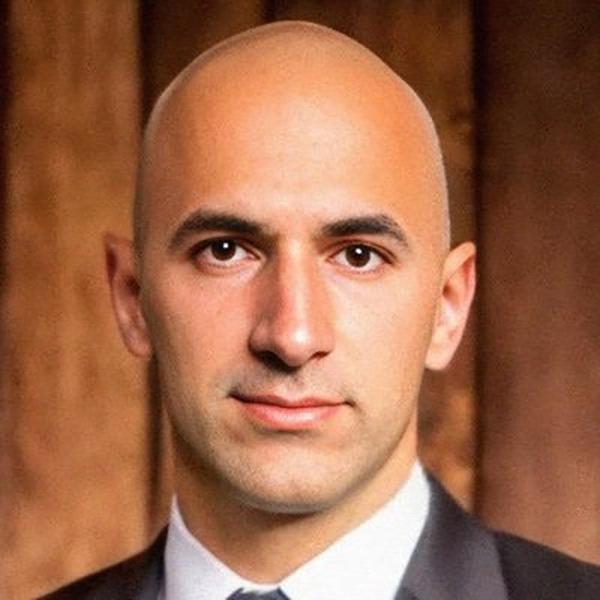
Portrait: Daniel Vassallo on X (@dvassallo).